What to Expect After a PRP Injection: Your Complete Recovery Guide
You have just received a platelet-rich plasma (PRP) injection — now what? Understanding what happens in the hours, days, and weeks after your treatment is essential for setting realistic expectations and giving your body the best chance to heal. PRP works by concentrating your body’s own growth factors and delivering them directly to the site of injury, triggering a natural repair process that unfolds gradually over time. In this guide, we walk you through the complete post-injection recovery timeline, explain what is normal and what is not, and share practical tips to help you maximize your results.
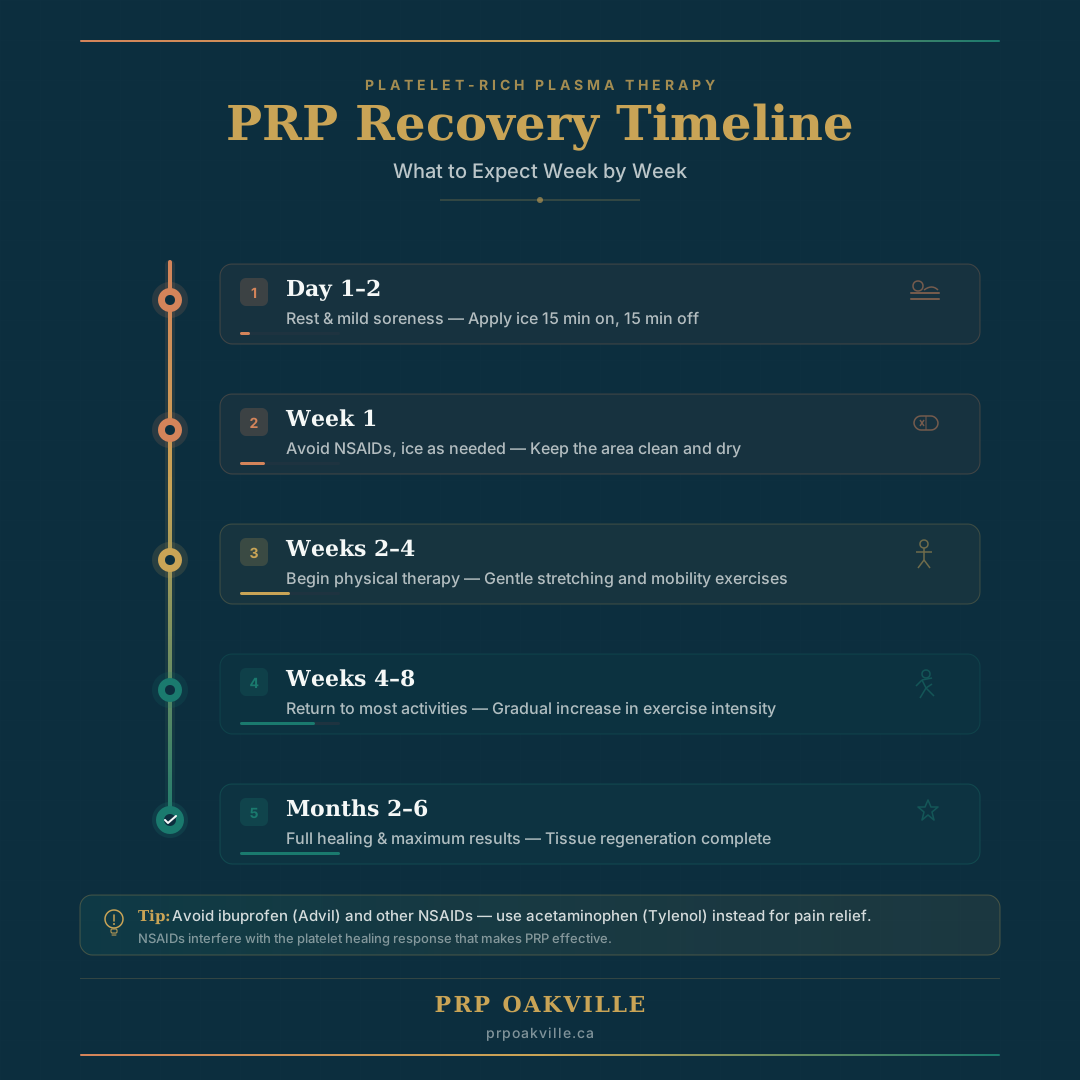
The First 24–48 Hours: What’s Normal
Immediately after a PRP injection, it is completely normal to experience some degree of soreness, swelling, and warmth at the injection site. Many patients describe the discomfort as similar to a deep bruise or a dull ache. You may also notice mild redness or a feeling of fullness in the treated area. These symptoms are not cause for concern — in fact, they are a positive sign that the concentrated platelets are doing exactly what they are designed to do: initiating an inflammatory response that signals your body to begin the healing process.
The intensity of post-injection discomfort varies depending on the treatment area and the severity of the underlying condition. Joint injections, such as those in the knee or shoulder, may produce more noticeable swelling than soft tissue injections. In most cases, the initial discomfort peaks within the first 24 to 48 hours and then begins to subside gradually. During this period, rest is your most important ally. Avoid putting unnecessary stress on the treated area, and allow the biological healing cascade to establish itself without disruption.
Week 1: The Rest and Protection Phase
The first week after your PRP injection is a critical window for recovery. During this time, the growth factors released by the concentrated platelets are actively recruiting immune cells and stem cells to the injury site, clearing away damaged tissue, and laying the biological foundation for repair. Your primary goal during this phase is to protect the treated area and avoid anything that could interfere with this process.
One of the most important guidelines during the first week — and typically through the first two weeks — is to avoid non-steroidal anti-inflammatory drugs (NSAIDs) such as ibuprofen (Advil, Motrin), naproxen (Aleve), and aspirin. NSAIDs work by suppressing inflammation, which is the exact opposite of what you want after a PRP injection. The controlled inflammatory response triggered by PRP is not a side effect — it is the mechanism through which healing begins. Taking anti-inflammatory medications during this period can blunt the platelet activity and potentially diminish your results.
If you need pain relief during the first week, acetaminophen (Tylenol) is generally considered safe because it manages pain without interfering with the inflammatory healing process. Your physician may also recommend applying ice to the treated area for 15 to 20 minutes at a time during the first two to three days to manage swelling, followed by gentle warmth after the initial swelling subsides. Always follow your specific physician’s instructions, as ice and heat guidance may vary depending on the treatment site and your individual circumstances.
Activity During Week 1
Light daily activities such as walking, gentle household tasks, and desk work are generally acceptable during the first week, provided they do not place direct stress on the treated area. However, you should avoid strenuous exercise, heavy lifting, high-impact activities, and prolonged standing or walking. If your injection was in a weight-bearing joint such as the knee or ankle, your physician may recommend limiting your time on your feet and using supportive footwear.
Weeks 2–4: Gradual Improvement Begins
As you enter the second and third week after your PRP injection, the initial inflammatory response begins to transition into the proliferative phase of healing. During this stage, the growth factors from your PRP treatment stimulate the production of new collagen, the formation of new blood vessels, and the proliferation of fibroblasts — the cells responsible for building and strengthening connective tissue.
Many patients notice that the initial soreness and swelling from the injection have largely resolved by the end of the second week. Some patients begin to feel modest improvements in their symptoms during this period, while others may not yet notice a significant change. Both experiences are completely normal. Healing is a gradual process, and the timeline varies from person to person depending on the severity of the injury, the treatment location, and individual biology.
This is typically when your physician may recommend beginning gentle physical therapy or rehabilitation exercises. Progressive, controlled movement helps guide tissue healing and ensures that newly forming structures develop the alignment, strength, and flexibility they need. Your physical therapist will tailor your programme to your specific condition, gradually increasing the intensity as your tissue matures.
Weeks 4–8: Significant Improvement
The period between four and eight weeks after a PRP injection is when most patients begin to notice meaningful improvement in their symptoms. Pain levels typically decrease noticeably, range of motion expands, and functional capacity improves. The new collagen and connective tissue that began forming during the proliferative phase is now being reorganized and strengthened through a process called remodelling, making the repaired tissue more resilient and better able to withstand normal loads.
During this phase, most patients can gradually return to their regular activities, including moderate exercise, recreational sports, and full work duties. However, it is important to listen to your body and avoid pushing through pain. Returning to activity should be progressive — start at a lower intensity than your pre-treatment level and increase gradually as your comfort and function improve.
Months 2–6: Full Healing and Maximum Results
The full benefits of PRP therapy are generally realized between two and six months after treatment. By this stage, the repaired tissue has matured to its final strength and structure, inflammation has fully resolved, and the treated area has achieved its maximum functional recovery. Some patients continue to experience gradual improvement even beyond the six-month mark, particularly for more severe conditions or chronic injuries that required more extensive tissue repair.
It is worth noting that the timeline above provides a general framework. Individual results will vary based on factors including the severity of your condition, the location of the injury, your age and overall health, and how closely you follow your post-treatment guidelines. Your physician will monitor your progress through follow-up appointments and can adjust your treatment plan as needed.
Activity Restrictions and Return to Exercise
One of the most common questions patients have after a PRP injection is when they can return to exercise, sports, and normal physical activity. While every case is unique, the following general guidelines apply to most patients:
- Days 1–3: Rest the treated area. Light walking and basic daily activities are acceptable.
- Days 4–14: Continue to avoid strenuous exercise, running, weightlifting, and high-impact activities. Gentle range-of-motion exercises may be introduced as directed by your physician.
- Weeks 2–4: Light cardiovascular exercise (stationary cycling, swimming, elliptical) may be resumed if tolerated. Begin physical therapy if recommended.
- Weeks 4–8: Gradual return to moderate exercise, recreational sports, and resistance training. Increase intensity progressively.
- Weeks 8–12: Most patients can return to full athletic activity and high-impact sports, provided they have been cleared by their physician.
If your job involves physical labour, discuss a return-to-work timeline with your physician. Desk-based work can typically be resumed within one to two days of the injection, while physically demanding occupations may require a modified schedule for the first two to four weeks.
Pain Management Tips
Managing discomfort effectively after your PRP injection is important for your comfort and for protecting the healing process. Here are the key guidelines:
- Acetaminophen (Tylenol) is safe. It relieves pain without affecting the inflammatory response that PRP relies on. Follow the dosage instructions on the label or as directed by your physician.
- Avoid NSAIDs for at least two weeks. Ibuprofen, naproxen, aspirin, and other anti-inflammatory medications can interfere with platelet function and reduce the effectiveness of your treatment.
- Ice for the first 48–72 hours. Apply a cold pack wrapped in a cloth for 15 to 20 minutes at a time, several times a day, to manage initial swelling.
- Gentle heat after day 3. Once the acute swelling has subsided, warm compresses can help promote blood flow and comfort. Avoid excessive heat directly on the injection site.
- Elevation. If your injection was in a lower extremity (knee, ankle, foot), elevating the limb when resting can help reduce swelling during the first few days.
When to Call Your Doctor
While mild soreness, swelling, and warmth are expected after a PRP injection, certain symptoms may warrant a call to your physician. Contact your doctor if you experience any of the following:
- Fever above 38.5°C (101.3°F) that persists for more than 24 hours after the injection, as this may indicate an infection.
- Increasing pain that worsens significantly after the first 48 hours rather than gradually improving.
- Excessive swelling or redness that continues to expand beyond the injection site or is accompanied by warmth and tenderness that seems disproportionate.
- Drainage or pus from the injection site, which could be a sign of infection.
- Numbness, tingling, or loss of function in the treated area that was not present before the injection.
These complications are rare — PRP therapy has an excellent safety profile because it uses your own blood — but it is always better to err on the side of caution. If something does not feel right, reach out to your treatment provider.
Do’s and Don’ts After Your PRP Injection
To make your recovery as smooth and effective as possible, keep the following checklist in mind:
Do’s
- Do rest the treated area for the first 48 to 72 hours. Give the healing process time to establish itself.
- Do use acetaminophen (Tylenol) for pain relief as needed.
- Do apply ice for the first two to three days to manage swelling, followed by gentle heat.
- Do stay hydrated. Adequate water intake supports every aspect of tissue repair and cellular function.
- Do eat a balanced diet rich in lean protein, fruits, vegetables, and whole grains to give your body the building blocks it needs for tissue repair.
- Do attend physical therapy if recommended by your physician. Guided rehabilitation is one of the best ways to optimize your outcome.
- Do keep your follow-up appointments. Your physician will monitor your progress and adjust your treatment plan as needed.
Don’ts
- Don’t take NSAIDs (ibuprofen, naproxen, aspirin) for at least two weeks after the injection.
- Don’t engage in strenuous exercise or high-impact activities during the first two weeks.
- Don’t apply heat to the injection site during the first 48 to 72 hours when swelling is at its peak.
- Don’t smoke. Smoking impairs blood flow and slows the healing process, potentially reducing the effectiveness of your PRP treatment.
- Don’t rush your recovery. PRP promotes genuine tissue repair, not just symptom masking. Pushing too hard too soon can compromise your results.
- Don’t ignore your body. If an activity causes significant pain at the treated site, stop and give yourself more time before trying again.
Tips to Maximize Your PRP Results
While PRP therapy does the heavy lifting biologically, your choices during recovery can meaningfully influence the outcome. Here are the most important things you can do to get the best possible results from your treatment:
- Stay well hydrated. Water is essential for cellular function, nutrient delivery, and waste removal — all critical components of tissue repair. Aim for at least eight glasses of water per day.
- Prioritize nutrition. Your body needs protein to build new tissue, vitamin C for collagen synthesis, and zinc and iron for immune function. A diet rich in lean meats, fish, eggs, leafy greens, and colourful fruits and vegetables provides the raw materials your body needs to heal.
- Follow your physical therapy plan. Rehabilitation exercises are not optional — they are an integral part of the healing process. Controlled, progressive loading helps the newly formed tissue develop proper alignment, strength, and resilience.
- Get adequate sleep. The majority of tissue repair occurs during sleep, when the body releases growth hormone and allocates resources to healing. Aim for seven to nine hours per night.
- Avoid alcohol in excess. Excessive alcohol consumption can impair immune function and slow healing. Moderate your intake during the recovery period.
- Be patient and trust the process. PRP therapy works on your body’s natural timeline. Unlike cortisone injections that may provide quick but temporary relief, PRP promotes lasting tissue repair — and that takes time. Most patients see significant improvement between four and eight weeks, with full results at three to six months.
- Communicate with your care team. If you have questions or concerns at any point during your recovery, do not hesitate to contact your physician. Open communication ensures that your recovery stays on track.
Your Recovery, Your Timeline
Every patient’s recovery journey is unique, and there is no single timeline that applies to everyone. The guidelines in this article are meant to give you a clear framework for what to expect, but the most important factor in your recovery is the personalized guidance you receive from your treatment provider. They know your condition, your goals, and your body — and they are the best resource for answering specific questions about your individual recovery.
What we can say with confidence is that PRP therapy is one of the safest and most effective regenerative treatments available today. By following your post-injection guidelines, making healthy lifestyle choices, and giving your body the time it needs to heal, you are putting yourself in the best possible position for a successful outcome.
Ready to Explore PRP Therapy?
Book a consultation to find out if platelet-rich plasma treatment is the right option for your recovery.
Book a Consultation