PRP vs. Cortisone Injections: Which Is Better for Pain Relief?
If you are dealing with chronic joint pain, tendonitis, or osteoarthritis, you have likely encountered two common treatment options: cortisone injections and platelet-rich plasma (PRP) therapy. Both are delivered via injection, both target pain and inflammation, and both are performed in a clinical setting without surgery. But that is where the similarities end. Cortisone is a synthetic corticosteroid designed to suppress inflammation, while PRP is a regenerative treatment that uses your own blood to stimulate healing at the cellular level. Understanding the differences between these two approaches — how they work, how long they last, and what they cost — is essential for making an informed decision about your care.
How Cortisone Injections Work
Cortisone is a powerful synthetic corticosteroid that mimics the effects of cortisol, a hormone your body produces naturally to regulate inflammation. When injected directly into a joint or tendon, cortisone rapidly suppresses the inflammatory response that is causing pain and swelling. It does not repair damaged tissue or reverse the underlying condition — it simply turns down the volume on inflammation, providing temporary symptomatic relief.
For many patients, the appeal of cortisone is its speed. Pain relief can begin within 24 to 48 hours of the injection, and in some cases, patients notice a significant reduction in swelling and discomfort within a few days. This makes cortisone an attractive short-term solution, particularly for patients who need fast relief to get through a demanding period at work or to manage an acute flare-up.
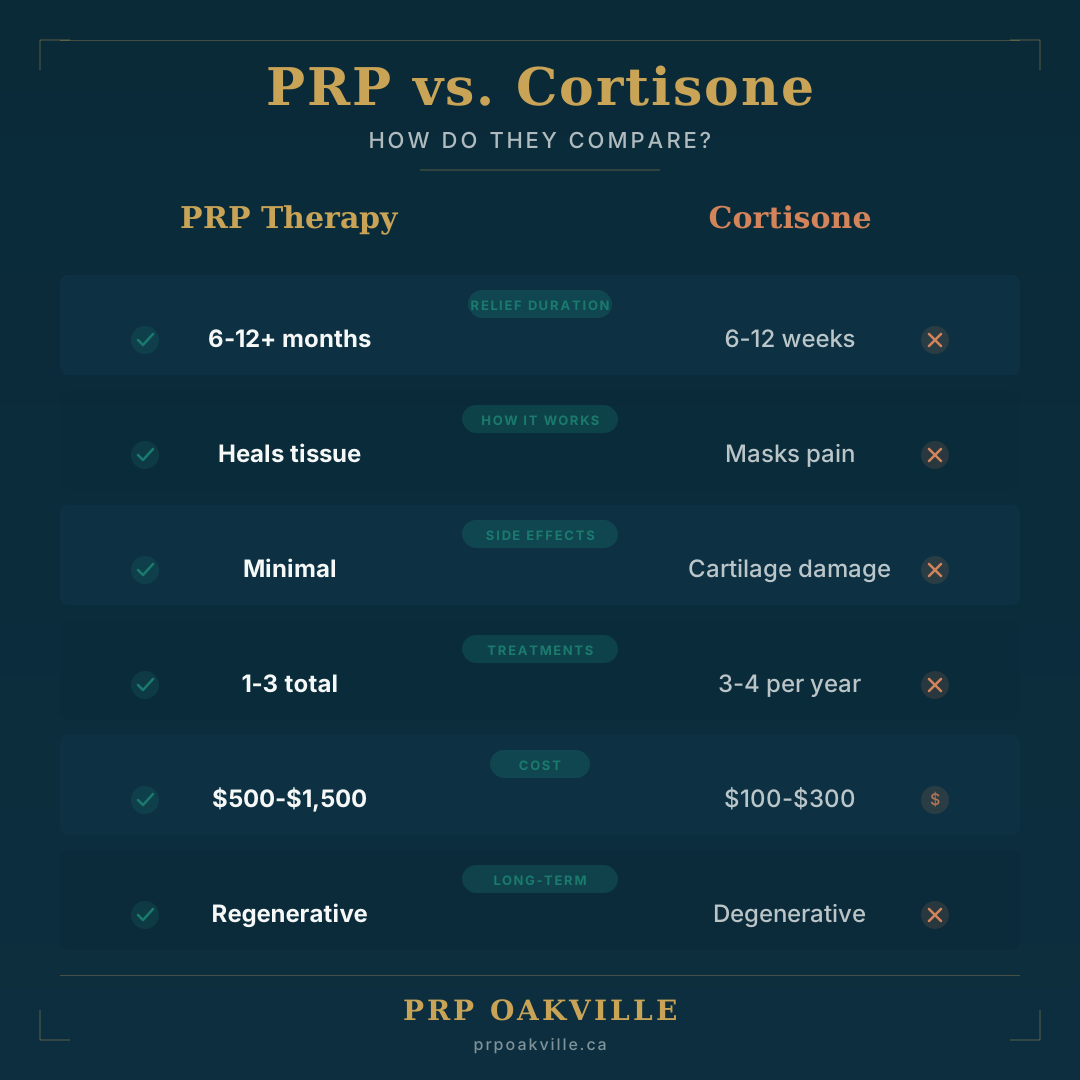
However, cortisone does not address the root cause of the problem. Once the anti-inflammatory effect wears off — typically within six to twelve weeks — the pain and inflammation often return, sometimes to the same degree as before the injection.
How PRP Therapy Works
PRP therapy takes a fundamentally different approach. Instead of suppressing symptoms, it aims to initiate a genuine healing response in damaged tissue. The process begins with a simple blood draw from the patient’s arm. That blood is then placed in a centrifuge, which separates the platelets and their concentrated growth factors from the rest of the blood components. The resulting platelet-rich plasma — containing three to five times the normal concentration of platelets — is injected directly into the site of injury under ultrasound guidance.
Platelets release a cascade of growth factors, including platelet-derived growth factor (PDGF), transforming growth factor-beta (TGF-β), and vascular endothelial growth factor (VEGF). These proteins recruit stem cells to the area, stimulate collagen production, promote new blood vessel formation, and modulate the inflammatory environment to favour tissue repair over tissue breakdown.
Because PRP works by activating biological healing processes, the results are not instantaneous. Most patients begin to notice improvement four to six weeks after the injection, with continued gains over the following three to six months as the tissue remodels and strengthens.
Effectiveness: Short-Term vs. Long-Term Relief
The most critical distinction between cortisone and PRP lies in the duration of their effects. Cortisone delivers fast but temporary relief. Studies consistently show that cortisone injections provide significant pain reduction for approximately six to twelve weeks, after which the benefits diminish. Patients who receive repeated cortisone injections often report diminishing returns, with each subsequent injection providing less relief and shorter duration.
PRP, by contrast, offers a slower onset but considerably longer duration of benefit. Clinical research published in journals such as The American Journal of Sports Medicine and Knee Surgery, Sports Traumatology, Arthroscopy has demonstrated that PRP injections can provide meaningful pain reduction and functional improvement lasting six to twelve months or longer. A landmark 2021 meta-analysis comparing PRP to cortisone for knee osteoarthritis found that while cortisone outperformed PRP at the one-month mark, PRP produced significantly superior outcomes at three, six, and twelve months post-treatment.
For patients seeking lasting relief rather than a temporary fix, this distinction is significant. PRP does not merely mask pain — it promotes structural repair that can provide sustained improvement over time.
Side Effects and Safety Profile
Cortisone Side Effects
While cortisone is generally considered safe for occasional use, repeated injections carry well-documented risks:
- Cartilage degradation. Multiple studies have shown that repeated cortisone injections can accelerate cartilage breakdown in joints, potentially worsening the very condition they are intended to treat. A 2017 study published in Radiology found that patients who received cortisone injections for knee osteoarthritis experienced greater cartilage loss over two years compared to those who received a placebo.
- Tendon weakening. Cortisone can weaken tendon fibres, increasing the risk of tendon rupture, particularly in weight-bearing tendons such as the Achilles and patellar tendons.
- Blood sugar spikes. Cortisone can cause temporary but significant elevations in blood glucose levels, which is particularly concerning for patients with diabetes or pre-diabetes.
- Local tissue atrophy. Repeated injections can cause thinning of the skin and subcutaneous fat at the injection site, leading to visible depressions or discolouration.
- Cortisone flare. Some patients experience a temporary increase in pain and inflammation for one to two days after the injection before the anti-inflammatory effect takes hold.
PRP Side Effects
Because PRP is derived entirely from the patient’s own blood, the risk of adverse reactions is extremely low. There is virtually no risk of allergic reaction or immune rejection. The most common side effects are mild and temporary:
- Injection-site soreness. Mild pain and swelling at the injection site for two to five days is the most frequently reported side effect.
- Temporary stiffness. Some patients experience stiffness in the treated joint for the first few days as the healing response begins.
- Bruising. Minor bruising at the blood draw or injection site may occur and resolves on its own.
Importantly, PRP does not carry the risk of cartilage degradation, tendon weakening, or blood sugar disruption associated with cortisone. This makes it a safer option for patients who require ongoing treatment or who wish to avoid the cumulative risks of repeated steroid injections.
Number of Treatments Required
Cortisone injections are typically limited to three to four per year in any given joint due to the risk of tissue damage with repeated use. Most physicians will not administer more than this, and some recommend even fewer to minimise the risk of cartilage degradation. Because the effects are temporary, patients who rely on cortisone often find themselves returning every few months for another injection — a cycle that compounds the cumulative risks over time.
PRP therapy, on the other hand, typically requires only one to three injections total for most conditions. Many patients achieve significant and lasting improvement after a single treatment. For more chronic or severe conditions, a series of two to three injections spaced four to six weeks apart may be recommended. After the initial treatment course, some patients opt for an annual maintenance injection, but this is not universally required.
Cost Comparison
Cost is often a deciding factor for patients weighing their options. In Ontario, cortisone injections are frequently covered under OHIP or supplemental health insurance, with out-of-pocket costs typically ranging from $100 to $300 per injection. This makes cortisone the more accessible option from a purely financial standpoint.
PRP therapy, as a newer regenerative treatment, is not currently covered by OHIP or most private insurance plans in Ontario. The cost per injection typically ranges from $500 to $1,500, depending on the provider, the preparation method, and the area being treated. While the upfront cost is higher, it is important to consider the total cost of treatment over time. A patient who receives cortisone injections every two to three months may ultimately spend a comparable amount over the course of a year, while also accumulating the risks associated with repeated steroid exposure.
When viewed as an investment in long-term joint health and sustained pain relief, PRP’s higher upfront cost often represents better value — particularly for patients who respond well to treatment and avoid the need for more invasive interventions down the line.
Best Candidates for Each Treatment
Cortisone May Be Right If You…
- Need rapid pain relief for an acute flare-up or an important event.
- Have a single, isolated episode of joint inflammation that is unlikely to recur frequently.
- Are managing pain while waiting for a scheduled surgery such as joint replacement.
- Require a covered treatment option and cannot absorb the cost of PRP at this time.
PRP May Be Right If You…
- Are looking for a longer-lasting solution that addresses the underlying cause of your pain rather than masking symptoms.
- Have mild to moderate osteoarthritis and want to slow or halt cartilage degradation.
- Have a chronic tendon injury — such as tennis elbow, Achilles tendonitis, or patellar tendonitis — that has not responded to rest, physiotherapy, or cortisone.
- Want to avoid the cumulative risks of repeated cortisone injections.
- Are an active individual or athlete who needs sustained joint function without the cycle of temporary relief and recurrence.
Can You Combine PRP and Cortisone?
Yes — in certain clinical scenarios, PRP and cortisone can be used together as part of a phased treatment strategy. However, timing matters. Cortisone is an anti-inflammatory agent, and PRP relies on the body’s natural inflammatory response to initiate healing. Administering both simultaneously or in close succession can be counterproductive, as the cortisone may suppress the very inflammatory signals that PRP needs to work effectively.
A common approach is to use a cortisone injection first to manage severe acute inflammation and provide immediate comfort, then follow with PRP therapy two to four weeks later once the corticosteroid has cleared the system. This allows the patient to benefit from rapid symptom relief while still receiving the regenerative benefits of PRP for long-term healing.
Your physician can help determine the most appropriate sequencing based on the severity of your condition, your treatment history, and your recovery goals.
What the Latest Research Says
The body of clinical evidence supporting PRP over cortisone for long-term outcomes continues to grow. A 2023 systematic review published in The Journal of Bone and Joint Surgery evaluated over 30 randomised controlled trials comparing PRP to corticosteroid injections across multiple joint and tendon conditions. The review concluded that PRP demonstrated statistically superior outcomes at six and twelve months for knee osteoarthritis, lateral epicondylitis (tennis elbow), and plantar fasciitis.
Another significant study published in Clinical Orthopaedics and Related Research found that patients with moderate knee osteoarthritis who received PRP injections reported a 50–60% improvement in pain and function scores at one year, compared to a 25–30% improvement in those who received cortisone. Crucially, the PRP group showed no evidence of accelerated cartilage loss on follow-up imaging, while the cortisone group demonstrated measurable progression of cartilage thinning.
For chronic tendon conditions, a randomised trial in the British Journal of Sports Medicine demonstrated that PRP produced significantly greater tendon thickness, improved vascularity, and better patient-reported outcomes compared to cortisone at both the six-month and one-year follow-up points. The cortisone group experienced initial improvement that plateaued and then declined, while the PRP group showed continued improvement throughout the study period.
These findings reinforce a growing consensus among sports medicine and orthopaedic specialists: while cortisone remains a useful tool for short-term symptom management, PRP is emerging as the preferred treatment for patients who prioritise long-term healing, tissue preservation, and sustained functional improvement.
Making the Right Decision for Your Recovery
Both cortisone and PRP have a role to play in musculoskeletal care. The right choice depends on your specific condition, your treatment goals, and the stage of your injury or disease. Cortisone can be an effective short-term tool when used judiciously. PRP offers a regenerative alternative that addresses the underlying biology of your condition and provides longer-lasting relief with fewer risks.
The best approach is to consult with a physician who is experienced in both conventional and regenerative treatment options. An honest assessment of your condition, combined with a clear understanding of what each treatment can and cannot achieve, will help you make the decision that is right for your body and your long-term health.
Ready to Explore PRP Therapy?
Book a consultation to find out if platelet-rich plasma treatment is the right option for your recovery.
Book a Consultation