PRP Therapy Cost in Ontario — What You Can Expect to Pay in 2026
One of the most common questions patients ask before considering platelet-rich plasma (PRP) therapy is straightforward: how much does it cost? Because PRP is not covered by OHIP and pricing can vary significantly between clinics, understanding what drives the cost — and what you should realistically budget — is an important part of making an informed treatment decision. In this article, we break down the typical costs of PRP therapy in Ontario, explain what factors influence pricing, and help you evaluate whether PRP represents good value compared to the alternatives.
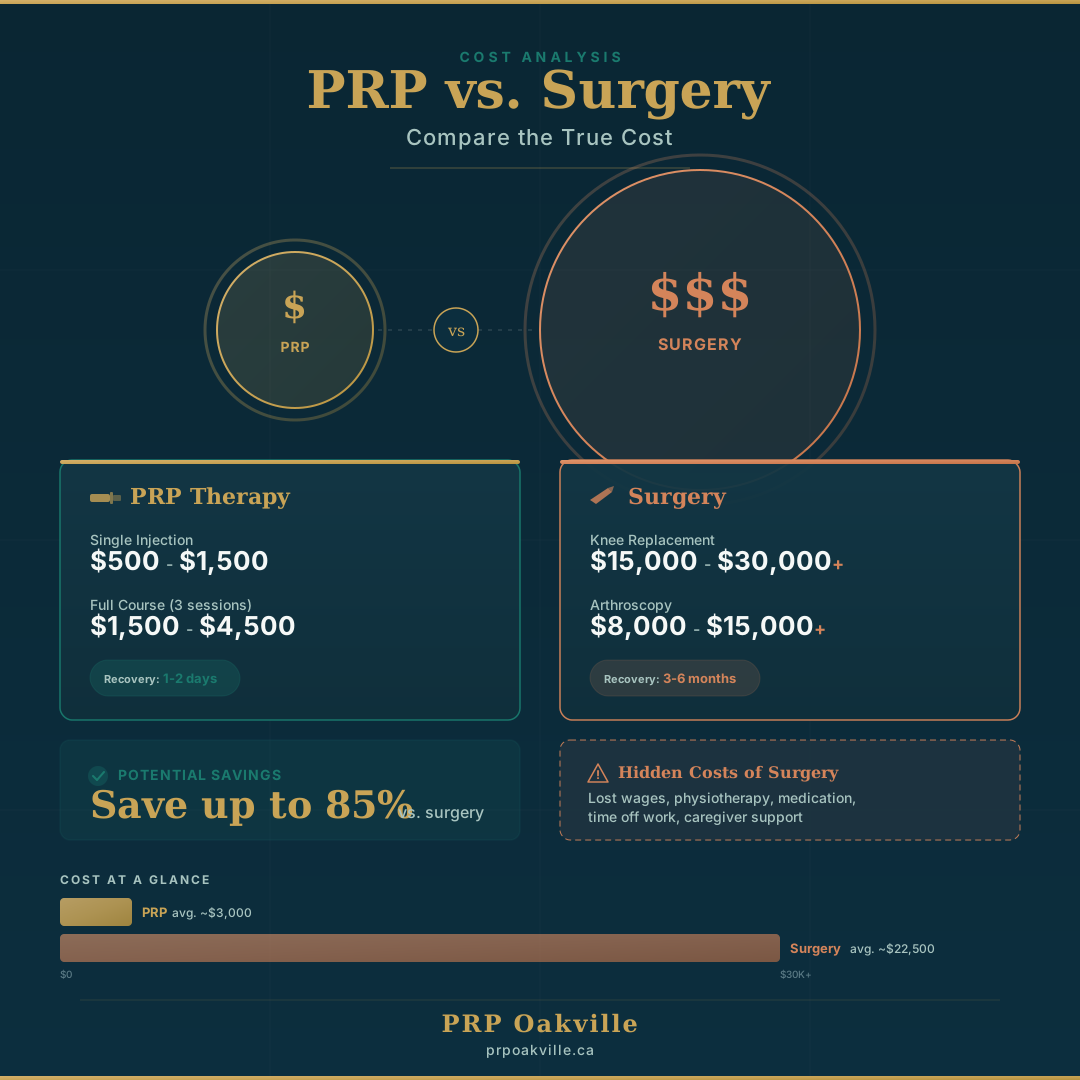
Average PRP Therapy Cost in Ontario
Across Ontario, the cost of a single PRP injection typically ranges from $500 to $1,500. This is a broad range, and the price you are quoted will depend on several factors including the clinic’s location, the physician’s level of expertise, the complexity of your condition, and the specific PRP preparation protocol used.
In the Greater Toronto Area and surrounding communities such as Oakville, Burlington, and Mississauga, most patients can expect to pay between $600 and $1,200 per injection. Clinics in downtown Toronto may charge at the higher end of the spectrum, while practices in smaller cities may fall closer to the lower end. However, price alone should never be the deciding factor — the quality of the treatment, the physician’s experience, and the equipment used all play a critical role in outcomes.
What’s Included in the Cost
When a clinic quotes you a price for PRP therapy, it is helpful to understand what that figure actually covers. A comprehensive PRP treatment typically includes the following components:
- Initial consultation and assessment. Your physician will evaluate your condition through a physical examination, review of your medical history, and potentially diagnostic imaging such as ultrasound or MRI. Some clinics include this consultation in the treatment price, while others charge it separately (typically $100–$250).
- Blood draw. A small sample of your blood — usually 30 to 60 millilitres — is collected from your arm. This is identical to a routine blood test.
- Centrifuge processing. Your blood is placed in a medical-grade centrifuge that separates the platelet-rich plasma from other blood components. The quality of the centrifuge and the PRP preparation kit can significantly affect both cost and treatment outcomes.
- Ultrasound-guided injection. The concentrated PRP is injected directly into the site of injury. Ultrasound guidance ensures precise placement, which is essential for optimal results.
- Follow-up appointment. Most reputable clinics include at least one follow-up visit to assess your response to treatment and determine whether additional injections are recommended.
When comparing quotes between clinics, make sure you understand exactly what is and is not included. A lower headline price that excludes the consultation, imaging, or follow-up may end up costing more than a slightly higher all-inclusive fee.
Factors That Affect PRP Pricing
Several variables influence how much you will pay for PRP therapy in Ontario. Understanding these factors can help you evaluate whether a quote is reasonable and what level of quality you can expect.
Number of Injections Required
Most musculoskeletal conditions respond well to a course of one to three PRP injections, spaced four to six weeks apart. Some patients experience significant improvement after a single injection, while others — particularly those with moderate to severe osteoarthritis or chronic tendon injuries — may require the full series. Your physician will recommend the appropriate number based on the nature and severity of your condition.
Area Being Treated
The anatomical location of the injection can influence pricing. Larger joints such as the knee or hip may require a greater volume of PRP, which can increase the cost. Smaller or more superficial areas such as the elbow or wrist may require less preparation and a lower volume, potentially resulting in a modestly lower price. Treatments targeting the spine or deep-seated structures may also carry a premium due to the added complexity and imaging requirements.
Clinic Location
As with most medical services, location plays a role in pricing. Clinics operating in high-rent urban centres tend to charge more than those in suburban or rural areas. That said, accessibility, convenience, and the overall quality of care should factor into your decision alongside geographic cost differences.
Physician Expertise and Equipment Quality
Not all PRP treatments are created equal. The experience and training of the physician performing the injection, the quality of the centrifuge and PRP preparation system, and the use of ultrasound guidance all affect outcomes — and cost. A physician with advanced training in regenerative medicine and musculoskeletal ultrasound will typically charge more, but the likelihood of a successful outcome is considerably higher. This is one area where cutting corners can be genuinely counterproductive.
Total Treatment Cost Scenarios
To help you plan your budget, here are some realistic cost scenarios based on typical Ontario pricing:
- Single injection (mild condition): $600–$1,200 for a single PRP treatment including consultation and follow-up. This may be sufficient for early-stage tendonitis, a mild ligament sprain, or a small partial tear.
- Two-injection course (moderate condition): $1,200–$2,400 total. Common for moderate osteoarthritis, chronic tennis elbow, or Achilles tendonitis that has not responded to conservative treatment.
- Three-injection course (advanced condition): $1,800–$3,600 total. Typically recommended for moderate to severe knee osteoarthritis, chronic rotator cuff tendinopathy, or complex joint injuries requiring a more aggressive treatment protocol.
Many clinics offer package pricing for multi-injection courses, which can reduce the per-injection cost by 10 to 20 percent. It is always worth asking about bundled pricing if your physician recommends more than one treatment.
PRP Cost vs. Surgery Cost
One of the most compelling arguments for PRP therapy is its cost relative to surgical alternatives. While PRP is an out-of-pocket expense, it is a fraction of what surgery costs — even when surgery is partially covered by OHIP. Consider the following comparisons:
- Full PRP course: $1,500–$4,500 total for one to three injections, with minimal time off work and no hospital stay.
- Knee arthroscopy: $8,000–$15,000+ when factoring in surgeon fees, anaesthesia, facility costs, and rehabilitation. Recovery time: 4–8 weeks of restricted activity.
- Total knee replacement: $15,000–$30,000+ in total costs (including rehabilitation, home care, and time off work). Recovery time: 6–12 months before full function is restored.
- Rotator cuff repair: $10,000–$20,000+ including surgical fees, facility costs, and months of physical therapy. Recovery time: 4–6 months.
Beyond the direct financial cost, surgery carries additional hidden expenses: extended time away from work, loss of income, childcare or home care needs, prescription pain medications, and ongoing physiotherapy. PRP therapy, by contrast, involves minimal downtime — most patients return to their normal routines within one to two days.
PRP Cost vs. Ongoing Conservative Treatment
It is also worth comparing PRP to the cumulative cost of ongoing conservative management. Many patients with chronic pain spend years cycling through physiotherapy appointments, chiropractic visits, massage therapy, and over-the-counter or prescription medications — often without achieving lasting relief.
A typical year of conservative management might include:
- Physiotherapy: 20–40 sessions at $80–$120 per session = $1,600–$4,800 per year
- Prescription anti-inflammatories or pain medications: $300–$1,200 per year
- Cortisone injections: $150–$400 per injection, typically two to four per year = $300–$1,600 per year
- Braces, supports, and assistive devices: $100–$500 per year
Over two to three years, the cumulative cost of managing chronic pain conservatively can easily exceed $5,000–$15,000 — often without resolving the underlying problem. PRP therapy, which targets the root cause of tissue damage rather than masking symptoms, may offer better long-term value by reducing or eliminating the need for ongoing palliative treatments.
Insurance and Financing Options
PRP therapy is not currently covered by OHIP, as it is classified as an elective or non-insured medical procedure. However, there are several ways to manage the cost:
- Private health insurance. Some extended health benefit plans cover a portion of PRP therapy, particularly if it is recommended by a physician and performed by a licensed medical professional. Check with your insurance provider to determine your specific coverage.
- Health Spending Accounts (HSAs). If your employer provides a Health Spending Account, PRP therapy may be eligible as a medical expense. HSAs allow you to use pre-tax dollars for qualifying health services.
- Medical tax deductions. In Canada, out-of-pocket medical expenses that exceed a certain threshold can be claimed as a tax deduction on your annual return. Keep all receipts and invoices for your records.
- Payment plans. Many clinics offer interest-free payment plans or financing options that allow you to spread the cost of treatment over several months, making it more manageable within your budget.
Why the Cheapest Option Is Not Always the Best
When researching PRP therapy, you may encounter clinics offering significantly lower prices than the market average. While affordability is important, it is worth understanding what can be compromised when the price drops substantially below the norm.
The quality of PRP therapy depends heavily on three factors: the preparation system used, the physician’s skill and experience, and the precision of the injection technique. Clinics that use lower-quality centrifuge systems may produce PRP with a lower platelet concentration, which can directly affect the treatment’s effectiveness. Similarly, injections performed without ultrasound guidance are less precise, meaning the PRP may not reach the target tissue optimally.
A physician with specialized training in musculoskeletal medicine and regenerative therapies brings a level of diagnostic acumen and technical skill that directly influences outcomes. They are better equipped to identify the exact source of your pain, determine whether PRP is the right treatment, and deliver the injection with the precision required for maximum benefit.
In short, PRP therapy is an investment in your health. As with most medical treatments, the goal should be to find the best value — not simply the lowest price. A slightly higher upfront cost at a reputable clinic with experienced physicians and high-quality equipment is far more likely to deliver the results you are hoping for than a discount treatment that may need to be repeated or may not work at all.
Getting a Personalized Cost Estimate
Because every patient’s condition is unique, the most accurate way to understand what PRP therapy will cost for you is to schedule a consultation with a qualified clinic. During your initial appointment, your physician will assess your specific injury or condition, discuss the recommended treatment protocol (including how many injections you are likely to need), and provide a transparent cost breakdown with no hidden fees.
At our Oakville clinic, we offer complimentary consultations so you can get a clear understanding of your treatment options and associated costs before making any commitments. We believe that informed patients make the best decisions about their care, and we are committed to transparency in everything we do.
Ready to Explore PRP Therapy?
Book a consultation to find out if platelet-rich plasma treatment is the right option for your recovery.
Book a Consultation